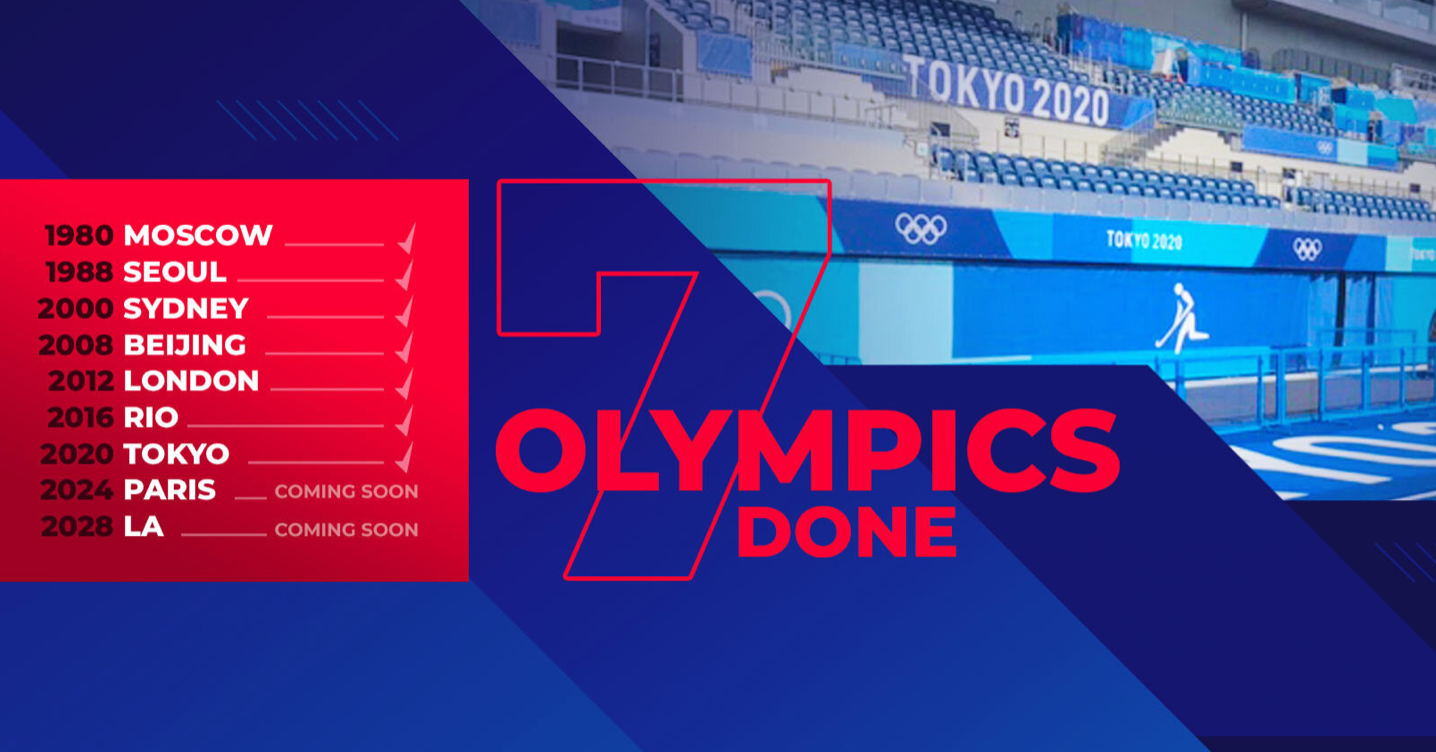
The last day of Tokyo 2020 has come and gone, and it featured Poligras at the Olympic Games for the 7th time. The Netherlands and Belgium brought home the gold medals. Poligras sugar cane turfs looked amazing, and both players and officials were very happy with how they played.
The Poligras Tokyo GT (Green Technology) turf has been a huge step change for hockey; our R&D, manufacturing, and installation teams were able to use new materials to create climate positive turf while still ensuring it delivered Olympic quality performance.
“The Poligras Olympic turfs played brilliantly, and the venue and pitches looked stunning. The players trusted the surfaces which allowed them to showcase their high-speed passing, fluid skills and aerial play – the quality of hockey has been extraordinary,” said Jon Wyatt, FIH and Development Director
On top of this, the turfs have an excellent sustainability story, created using bio-based materials and requiring less water, helping Tokyo 2020 reach their environmental sustainability targets. We are very happy with the turf and Poligras’ ongoing commitment to hockey,” said Wyatt.
Poligras says that they are committed to fast and fluid hockey, and “the incredible skills and high number of goals prove that our turf was a showstopper.” In Tokyo there were 351 goals in total, a per match average of 3.74 for women and 5.5 for men. This continues a general upward trend in goals at the Olympics:
-
At Rio 2016, the average goals per match were 3.39 for women, and 4.97 for men
-
The women’s goals per match average has increased at the last 3 Olympics
-
Since Beijing 2008, the men’s event has seen a 20% increase in goals per match
These key performance indicators for us show that turf development continues to help the game be fast and exciting. The Tokyo turf also further supported hockey’s aerial revolution which is taking the game to new levels; the soft fibres allow for the ball to be picked up, and the bounce cushioning means it is easier to control. The first goal by Australia in their semi-final versus Germany shows the box office value of taking hockey to new heights.
16 of the 24 teams at Tokyo trained on Poligras. In the end, 12 of quarter-finalists and 6 of semi-finalists where ‘Poligras teams’, which shows that preparing on the competition surface pays off.
This article is based off of a press release from SportGroup. For more sports, news, and entertainment, follow us on Twitter @MWSNsports or like our page on Facebook.